The Building Performance Hub ~ 01494 358 159 ~ admin@bcta.group

This banner reel contains paid advertising

HETAS Core Knowledge

The HETAS Core Knowledge course provides a strong grounding for anyone working with, or aspiring to work with, solid fuel, wood and biomass appliances. As the introductory module for all HETAS pathways, it gives new learners the confidence to understand key concepts while offering experienced professionals a structured refresh of essential principles. The course is delivered at The Building Performance Hub using clear, practical teaching designed to help participants navigate legislation, technical requirements and real‑world installation scenarios.

Learners begin by exploring the framework of regulations and industry guidance that underpin the safe installation and operation of appliances. This includes responsibilities of installers, manufacturers, and consumers; notification procedures; and the wider context of energy efficiency and air quality requirements. From there, the course builds a detailed understanding of solid fuels and biomass, helping participants recognise and assess fuel types including natural solid fuel, manufactured solid fuel, wood logs, wood pellets and briquettes, alongside other biomass residues.

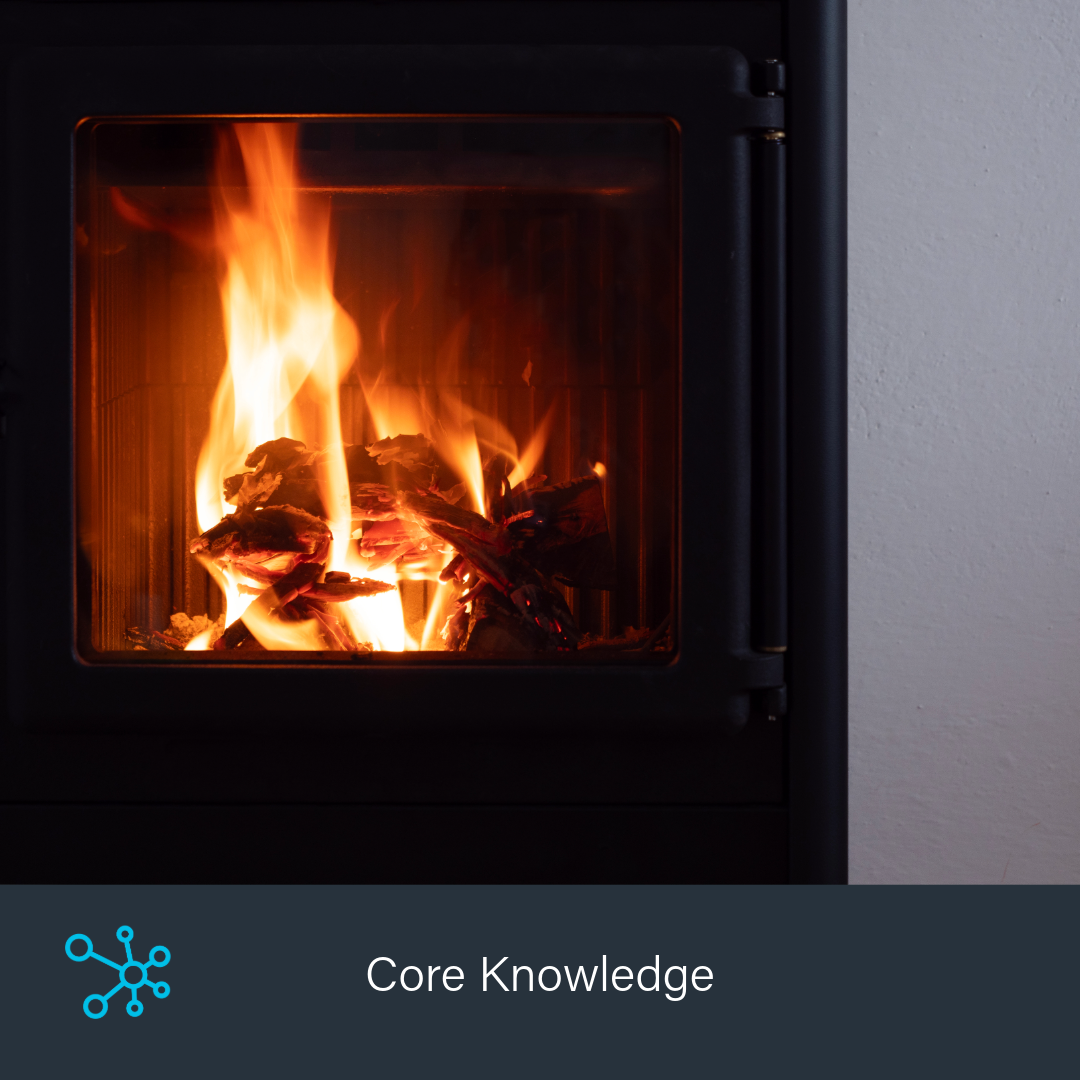
A significant portion of the training is dedicated to combustion. Learners develop an understanding of how fuel characteristics influence appliance performance, how combustion processes differ between fuel types, and how environmental factors—including moisture content, calorific value and storage—affect efficiency. The course also introduces the causes of carbon monoxide production, the early signs of CO exposure and the procedures required to respond safely and effectively to CO‑related incidents.

Additional Information

What To Expect on the HETAS Core Knowledge Course

The HETAS Core Knowledge course provides a strong grounding for anyone working with, or aspiring to work with, solid fuel, wood and biomass appliances. As the introductory module for all HETAS pathways, it gives new learners the confidence to understand key concepts while offering experienced professionals a structured refresh of essential principles.

Understanding Combustion and Ventilation Requirements

The course explains the ventilation requirements necessary for safe appliance operation, including the differences between single and multiple appliances within the same property. Participants learn how to identify appropriate ventilation provisions, interpret test results and understand how changes to a building’s structure—such as additional insulation or draught‑proofing—can influence appliance performance. The safe movement of products of combustion, chimney function, and the factors affecting performance are also explored in detail.

Learners are guided through appliance commissioning, installation checks, and the inspection of flue systems. Real‑world examples are used to highlight common installation issues, helping participants recognise risks, ensure compliance and promote good practice throughout the installation process.

Course Duration and Assessment

This is a one‑day, centre‑based training course. Assessment is carried out through structured knowledge‑based evaluation, and successful participants receive a HETAS Statement of Results. No previous experience is required, making this course suitable for complete beginners as well as those seeking to progress onto further HETAS qualifications.

Who Should Attend

The course is ideal for candidates entering the solid fuel, wood or biomass sector for the first time, as well as existing professionals who want a structured introduction before progressing to appliance‑specific HETAS modules. It is also suitable for anyone who works around these technologies—such as surveyors, building professionals or those in related trades—who need a clear understanding of fuels, combustion, chimney function and regulatory responsibilities.

Related Products